Chapter 2: Searching
2.5 Databases and Indexes
Databases and indexes are the third category of search tools we are examining in this chapter.
Databases
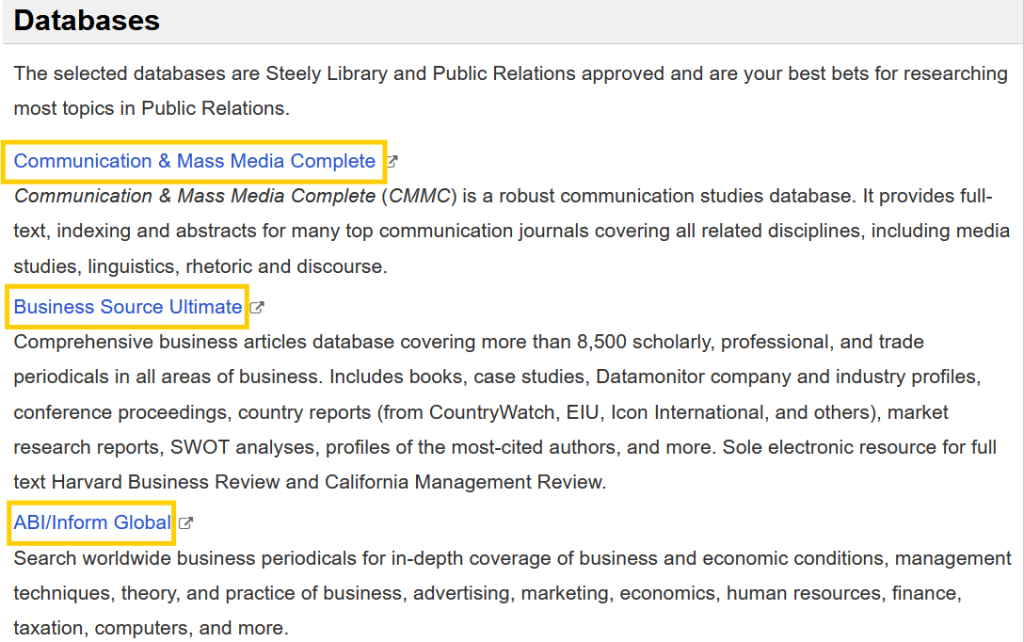
If you are not familiar with databases, you will learn about them in this class! These massive hoards of knowledge have similarities but also traits that are unique to each one. For example, consider three different databases available at Steely Library that are recommended from Public Relations students: Communication & Mass Media Complete, Business Source Ultimate, and ABI/Inform Global. While there’s likely some overlap, each will contain some unique sources not found in another one.
Indexes
Some publishers create logs, or indexes, of all the work they have published. An index can include a summary and subject tags to help direct you to a specific source from that publisher.